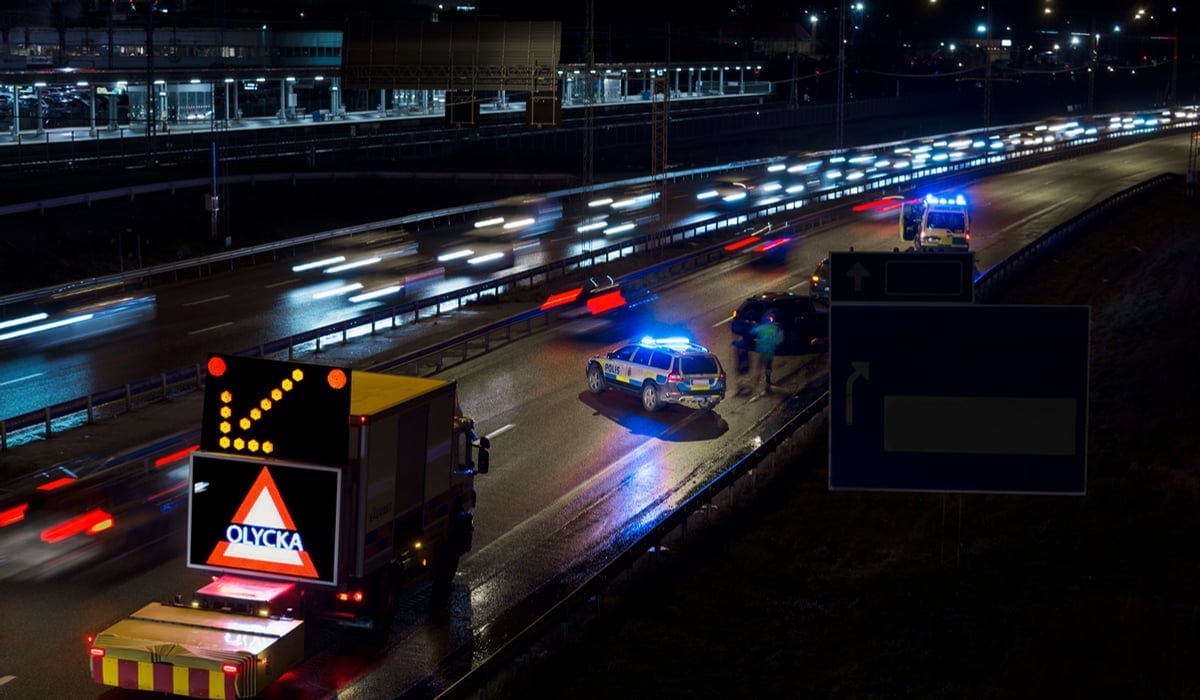
Drones in prehospital care
With drones, you can enhance the initial situation report for resource optimisation and plan healthcare interventions, as well as deploy defibrillators.
Drones in prehospital care
The project is investigating two different ways to use drones in pre-hospital care – delivering defibrillators (AEDs) and using video to quickly gain a situational overview of an accident scene to optimise resources.
Defibrillator
By using drones equipped with automated external defibrillators (AEDs), emergency medical services can quickly deliver life-saving devices to the scene of an out-of-hospital cardiac arrest. Research has been conducted on the effects of this for a long time at the Centre for Resuscitation Research at the Karolinska Institute/Södersjukhuset, and positive effects have been observed. Now we will test this in a pilot.
Read more about Center for Resuscitation Science (Extern länk)
Drone Situation Report
The integration of 5G ensures that drones can also provide real-time video streams to ambulance services from the scene of an incident, which improves situational awareness and strengthens decision-making and resource optimisation in critical moments. Currently, the first unit to arrive at the accident scene makes a so-called windscreen report over the radio (RAKEL) describing the situation.
It's not always easy to accurately describe what's happening in speech, which means the decision-making basis isn't optimal for those who need to ensure the right resources are in place. Drones also save time, as they will, in most cases, arrive faster than the first vehicle-borne unit.
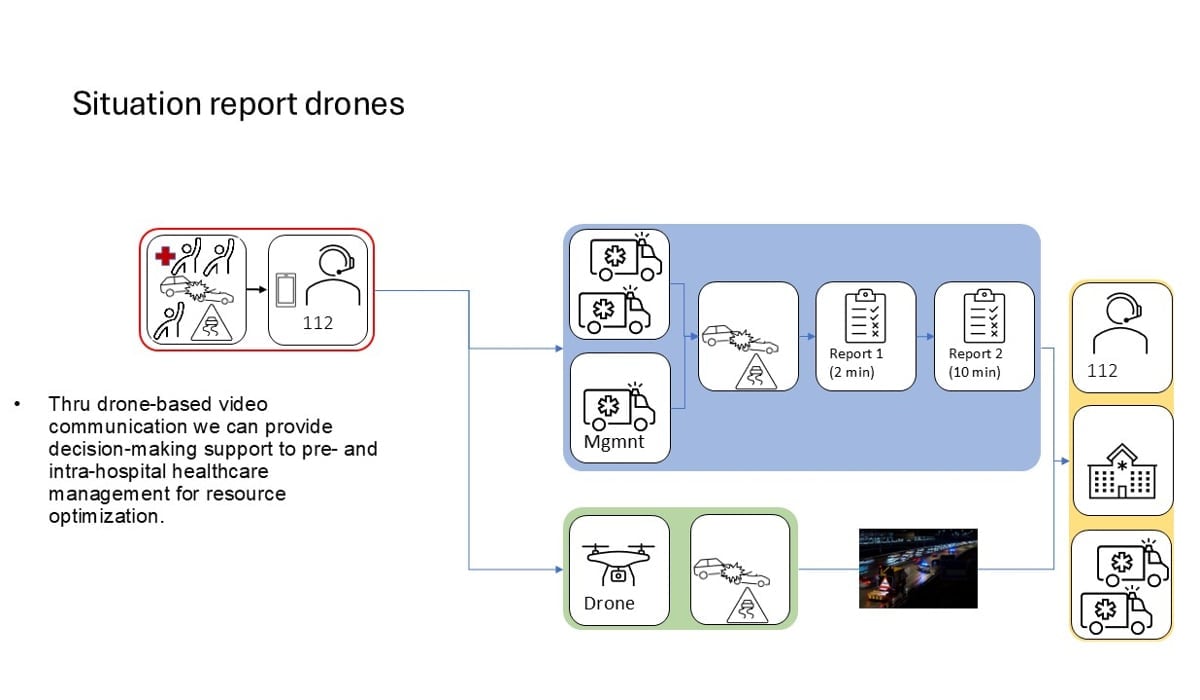
Description of how the process works
The first unit (ambulance) to reach an accident scene issues a brief report within two minutes, the so-called windshield report, back to SOS Alarm and the medical emergency control centre via radio (RAKEL). It should describe the scope so a decision can be made on how many resources to allocate. A more detailed report should then be made within ten minutes. These reports can sometimes be brief, which can make it difficult to assess how serious the accident is.
With video from a drone, you can get a better overview of what happened, and the resources needed can be optimised. The drone also arrives before the first unit in most cases, saving time, which can be crucial.

- Updated: 24 february 2026